Country guide
Buying property in Montenegro: Budva, Tivat and Bar
A euro-using Adriatic coast with dramatic scenery and an EU accession path — plus some Balkans-specific legal checks you must not skip.
Market overview
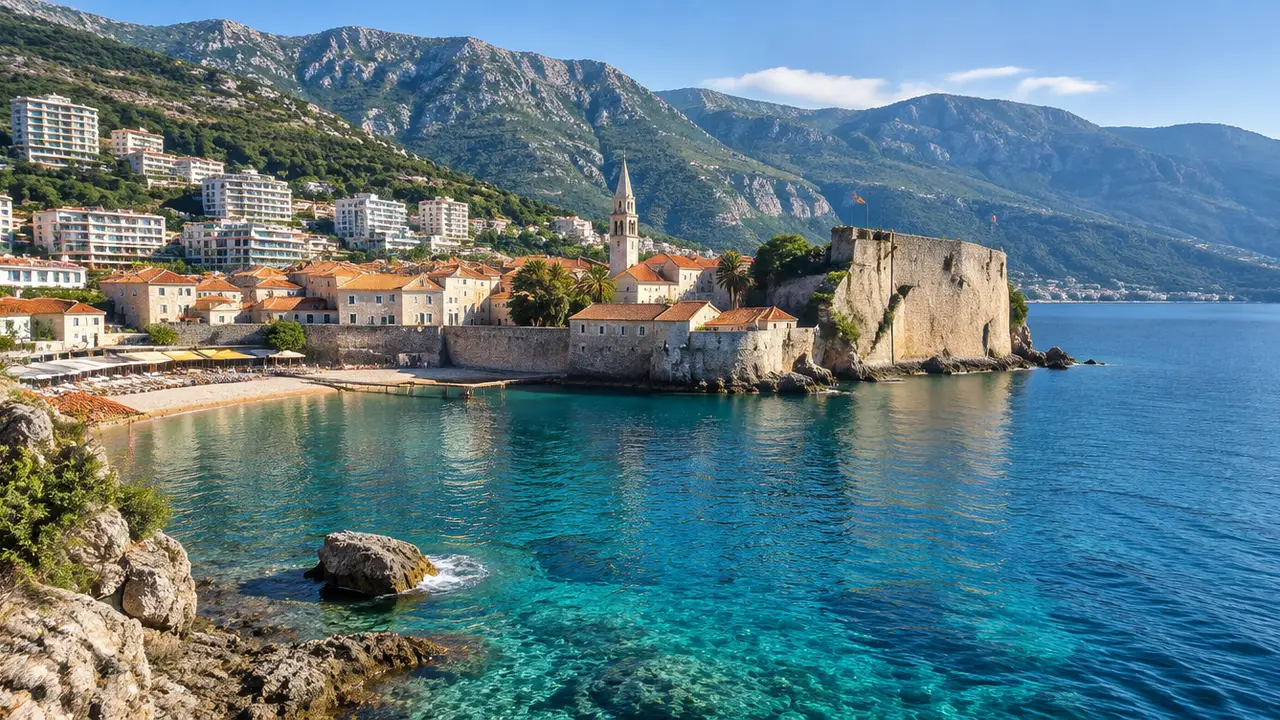
Montenegro’s coast runs from Herceg Novi and the Bay of Kotor through Tivat and Budva to Bar and Ulcinj. Tivat (home to marina developments) and Budva are the most expensive; Bar and the south are cheaper and more residential. The country uses the euro and is an EU candidate. Demand grew after 2022 with arrivals from Russia, Ukraine, Serbia and Turkey.
Can foreigners buy — and what exactly?
Foreigners can own apartments, houses and building land. Agricultural land, forests, protected areas and some border areas are restricted for foreign individuals, with limited exceptions; a Montenegrin company can be used in some cases. All property contracts are signed before a notary.
The buying process
Cadastre check
Your lawyer compares the real-estate register extract with the physical property and the building permit — discrepancies are common.
Notarised contract
The sale contract is signed before a notary; payment usually through bank accounts.
Transfer tax assessment
The tax administration assesses and issues the transfer tax decision.
Registration
The Real Estate Administration registers the new owner.
Taxes and costs
| Cost | Typical amount | Notes |
|---|---|---|
| Transfer tax (resale) | 3% up to €150k; higher bands above | Progressive above €150,000; new builds carry VAT in the price instead |
| Notary | Regulated fee | Depends on value |
| Lawyer | ≈ 1% or fixed | |
| Agent | ≈ 3% | Sometimes split between parties |
| Annual property tax | ≈ 0.25–1% of market value | Set by municipality |
Run your own numbers with the total cost calculator (select “Montenegro”).
Mortgages and payment plans
Mortgages for non-residents are limited. Most foreign purchases are cash; some developers offer instalment plans during construction.
Renting out and yields
Coastal rentals are strongly seasonal, with demand concentrated in July–August. Private accommodation must be registered with the municipality and tourist tax collected per guest. Indicative gross yields are often quoted in the 4–6% range. Winter occupancy on the coast is low outside Tivat, Kotor and Bar.
Residency through property
Owning property in Montenegro is a ground for temporary residence. Since January 2026, non-EU applicants need property with a tax-assessed value of at least €150,000. Earlier permit holders are generally grandfathered on renewal. Permits are usually issued for one year and renewed; permanent residence becomes possible after several years of continuous temporary residence.
Risks to know
- Illegal construction and legalisation: some buildings or floors lack permits; they may be impossible to register or mortgage.
- Cadastre mismatches between documents and reality.
- Seasonality and infrastructure pressure in summer.
- Changing residence rules as the country aligns with the EU.
Where to buy: cities and areas
| Area | Type | Why buyers look here | Watch out for |
|---|---|---|---|
| Budva | Resort | Beaches, nightlife, strong summer demand | Overbuilding, high prices, quiet winter |
| Tivat / Luštica | Resort / premium | Marinas, airport, upscale developments | High entry prices |
| Kotor Bay, Herceg Novi | Resort + living | Scenery, heritage, longer season | Heritage restrictions, traffic |
| Bar | Living | Port city, year-round population, lower prices | Less tourist demand |
Area notes describe general characteristics, not investment recommendations.
Frequently asked questions
Can foreigners buy property in Montenegro?
Does buying property in Montenegro give residency?
What is the property transfer tax in Montenegro?
Where to verify
Start with these official or primary sources, then confirm the details with a local lawyer: