Country guide
Buying property in Serbia: Belgrade, Novi Sad and the mountains
An affordable European capital, a straightforward residence route for owners and mountain resorts for two seasons — with paperwork that needs a careful lawyer.
Market overview
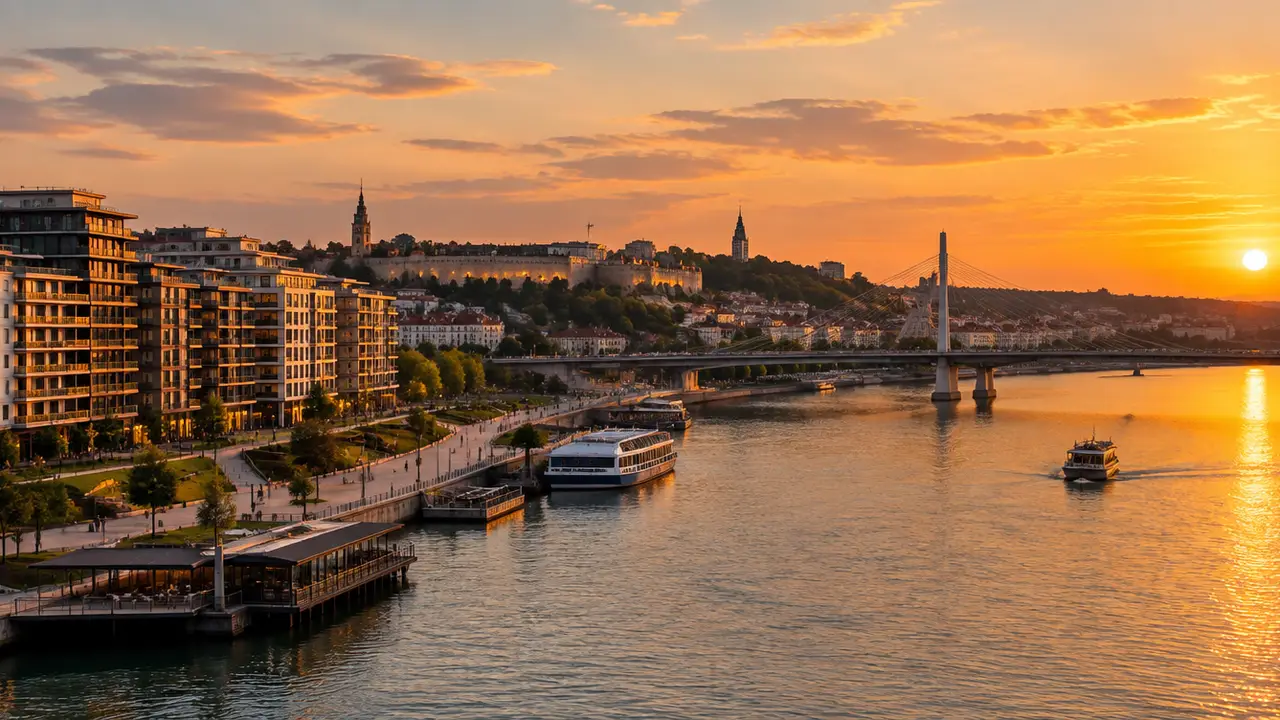
Belgrade dominates the market, with large new riverside developments and steady demand from locals, diaspora and foreign residents who arrived after 2022. Novi Sad is the second city, with a strong IT sector and university. In the mountains, Zlatibor (year-round, popular with Serbian families) and Kopaonik (ski resort) offer holiday apartments. Serbia is an EU candidate; it uses the dinar, which has been relatively stable against the euro.
Can foreigners buy — and what exactly?
Foreigners can buy apartments, houses and building land on the basis of reciprocity — your country must allow Serbian citizens to buy property. Most European countries, the USA and many others meet this; the notary checks it. Agricultural land is restricted for foreigners.
The buying process
Check the cadastre
Your lawyer obtains the real estate cadastre extract, checks ownership, mortgages, and whether the building is fully legalised and registered.
Preliminary contract
Often signed with a deposit, certified by a notary.
Main contract before a notary
The notary certifies the contract and submits it to the cadastre for registration.
Tax registration
File the transfer tax return (for resale) within the deadline; the tax authority issues the decision.
Taxes and costs
| Cost | Typical amount | Notes |
|---|---|---|
| Transfer tax (resale) | 2.5% | New builds include VAT in the price instead |
| Notary | Regulated fee | Depends on value |
| Cadastre registration | Small fee | |
| Lawyer | ≈ 1% or fixed | |
| Agent | ≈ 2–3% | Often charged to both parties |
| Annual property tax | Up to ≈ 0.4% | Municipal |
Run your own numbers with the total cost calculator (select “Serbia”).
Mortgages and payment plans
Mortgages for non-residents are limited; banks generally require residence and local income. Foreign buyers mostly pay cash.
Renting out and yields
Belgrade has year-round demand for long-term and mid-term rentals from professionals and expats. Mountain resorts rely on winter (Kopaonik) or holiday periods (Zlatibor). Short-term accommodation must be categorised and registered, with tourist tax collected. Indicative gross yields are often quoted around 4–6%.
Residency through property
Owning residential property is a ground for temporary residence in Serbia, with no minimum value stated in the law; the property must be a residential building or apartment. Permits can be issued for up to three years, and permanent residence can be requested after three years of continuous temporary residence. Renewal authorities look at whether you actually live there.
Risks to know
- Legalisation and registration: some buildings and extensions are not fully registered — check before paying.
- Reciprocity must be confirmed for your nationality.
- Off-plan risk with smaller developers.
- Rapid price growth in Belgrade’s new developments relative to local incomes.
Where to buy: cities and areas
| Area | Type | Why buyers look here | Watch out for |
|---|---|---|---|
| Belgrade (Vračar, Dorćol, New Belgrade, riverside) | Living | Capital, year-round rentals, diaspora demand | Legalisation checks in older stock |
| Novi Sad | Living | University and IT hub, lower prices | Smaller market |
| Zlatibor | Mountain resort | Year-round domestic tourism | Rapid, uneven construction |
| Kopaonik | Ski resort | Winter rentals | Short season |
Area notes describe general characteristics, not investment recommendations.
Frequently asked questions
Can foreigners buy property in Serbia?
Does owning property in Serbia give residency?
Where to verify
Start with these official or primary sources, then confirm the details with a local lawyer: