Country guide
Buying property in Spain: Costa del Sol, Costa Blanca and Valencia
One of Europe’s most popular markets for foreign buyers, with a strong legal system — but no longer a residency route, and with tightening rules for holiday lets.
What changed in 2025–2026
Spain abolished its Golden Visa on 3 April 2025. A proposed tax of up to 100% on purchases by non-EU non-residents was announced in January 2025 but had not been passed as of mid-2026. New tourist lets in apartment buildings need approval from three-fifths of owners. Check the status of all three before buying.
Market overview
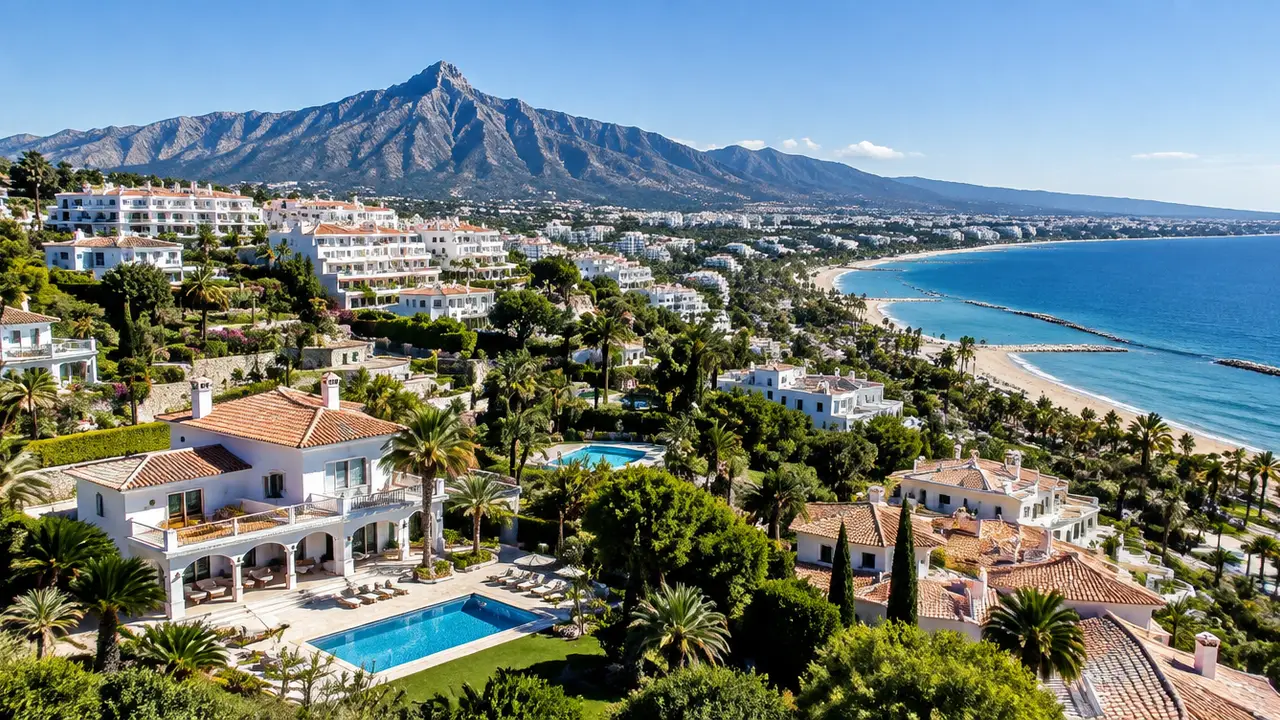
Foreign buyers account for a large share of purchases on the coasts. The Costa del Sol (Málaga, Marbella, Estepona) is the premium international market; the Costa Blanca (Alicante, Torrevieja, Benidorm) offers lower prices and a large retiree community. Valencia city has become a favourite for relocation. Prices in coastal and major urban areas rose strongly in 2023–2026 amid a housing shortage, prompting political pressure to limit tourist lets and foreign purchases.
Can foreigners buy — and what exactly?
Foreigners can buy freely, with only rare exceptions in military zones. You need an NIE (foreigner identification number). Beachfront property may be affected by the Coastal Law.
The buying process
NIE and bank account
Obtain an NIE (at a police station or consulate, or through a lawyer with a power of attorney) and open a Spanish bank account.
Reservation and due diligence
A reservation deposit takes the property off the market; your lawyer checks the land registry (nota simple), cadastre, debts, community fees, licences and planning status.
Private purchase contract
Commonly with a 10% deposit (arras contract), which sets penalties if either side withdraws.
Completion before a notary
The public deed (escritura) is signed; taxes are paid and the deed registered at the land registry.
For off-plan, Spanish law requires developers to guarantee buyer deposits with a bank guarantee or insurance.
Taxes and costs
| Cost | Typical amount | Notes |
|---|---|---|
| ITP transfer tax (resale) | ≈ 6–10% by region | Andalusia 7%; Valencia region around 10% |
| VAT (new builds) | 10% | Plus regional AJD stamp duty (≈ 0.5–2%) |
| Notary and registry | ≈ 1–2% combined | |
| Lawyer | ≈ 1% + VAT | |
| Agent | Usually paid by the seller | |
| Annual IBI tax | Municipal, based on cadastral value | |
| Non-resident income tax | 19% (EU/EEA) or 24% (others) | On rental income, or imputed income if not rented |
Run your own numbers with the total cost calculator (select “Spain”).
Mortgages and payment plans
Spanish banks lend to non-residents, commonly up to around 60–70% of valuation, with income and affordability checks. Fixed, variable and mixed rates are available.
Renting out and yields
Holiday rentals need a regional tourist licence. Since April 2025, new tourist lets in apartment buildings need the express approval of three-fifths of owners in the community. Many cities have moratoriums — for example, dozens of neighbourhoods in Málaga city — and Barcelona plans to phase out tourist-flat licences by 2028. A national registry introduced in 2025 was struck down by the Supreme Court in May 2026, according to reports, leaving regional licences as the key requirement. Long-term lets are governed by tenant-friendly law, and rent controls apply in declared “stressed” areas. Indicative gross yields are often quoted at 4–6.5%.
Residency through property
Buying property no longer gives residence in Spain. The Golden Visa closed on 3 April 2025. Other routes — the non-lucrative visa, digital nomad visa, work or family routes — do not depend on owning property. EU citizens have free movement.
Risks to know
- Tourist licence limits — check the exact address and building.
- The 100% tax proposal — not law as of mid-2026, but political risk remains.
- Illegal builds in some rural Andalusian and Valencian areas; check the planning status.
- Squatting (okupación) risk in empty properties — secure and insure.
- Non-resident taxes and filings every year, even if you do not rent.
Where to buy: cities and areas
| Area | Type | Why buyers look here | Watch out for |
|---|---|---|---|
| Málaga, Marbella, Estepona (Costa del Sol) | Resort + living | International demand, airport, long season | Licence moratoriums; high prices |
| Alicante, Torrevieja, Orihuela Costa (Costa Blanca) | Resort | Lower prices, retiree community | 10% ITP; seasonal areas |
| Valencia | Living | Relocation favourite, year-round city | Rising prices; rental controls |
Area notes describe general characteristics, not investment recommendations.
Frequently asked questions
Can I still get a Spanish Golden Visa by buying property?
Is there a 100% tax on foreigners buying property in Spain?
What are the buying costs in Spain?
Do I need an NIE to buy property in Spain?
Where to verify
Start with these official or primary sources, then confirm the details with a local lawyer: