Country guide
Buying property in Thailand: Phuket, Pattaya and Bangkok
Foreigners can own a condo unit outright — but not land. Understanding that single rule, and the 30-day rental rule, is most of the job.
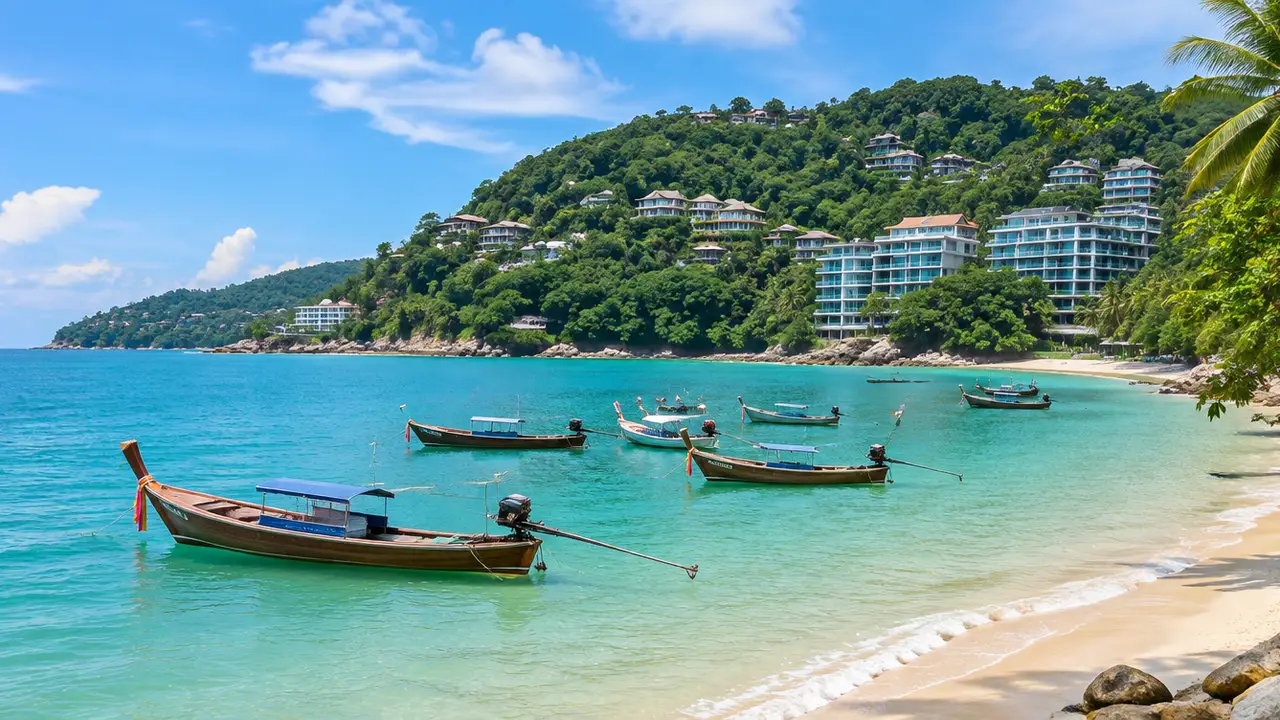
Foreigners can own condos, not land
A foreigner can own a condominium unit freehold as long as total foreign ownership in the building stays within 49% of the saleable area. Land cannot be owned by foreigners; the legal alternative is a registered lease (currently up to 30 years). Proposals for 99-year leases and a higher condo quota had not been enacted as of September 2026.
Market overview
Phuket is the main resort market for foreign buyers, with condos and pool villas marketed heavily to Russian, Chinese, European and Middle Eastern buyers. Pattaya offers cheaper condos near Bangkok. Bangkok is a large, liquid condo market with year-round demand from professionals and expats, but also significant supply.
Can foreigners buy — and what exactly?
- Condominium units: freehold ownership allowed within the 49% foreign quota. Purchase funds must be brought into Thailand in foreign currency, with bank documentation.
- Land and houses: foreigners cannot own land. Options are a registered lease of land (up to 30 years), ownership of the building structure separately from the land, or — for substantial investments — specific BOI-approved routes.
- Thai companies with nominee shareholders used to hold land for foreigners are illegal, and authorities have increased scrutiny.
- “30+30+30” lease promises: renewals beyond the first 30 years are contractual promises that may not be enforceable against later owners.
The buying process
Reservation and contract
Reserve the unit, then sign a sale agreement with a deposit.
Due diligence
Check the title (chanote), the foreign quota status of the building, juristic person debts and the building rules.
Transfer funds from abroad
Remit the price in foreign currency to a Thai bank and obtain the Foreign Exchange Transaction form (for larger amounts).
Transfer at the Land Office
Pay fees and taxes; ownership is registered on the title.
Taxes and costs
| Cost | Typical amount | Notes |
|---|---|---|
| Transfer fee | 2% of appraised value | Split by negotiation; often 50/50 |
| Specific business tax or stamp duty | 3.3% or 0.5% | SBT if the seller has owned less than 5 years; usually a seller cost |
| Withholding tax | Varies | Seller cost, often negotiated |
| Lawyer | Fixed fee or ≈ 1% | |
| Lease registration (land) | 1% + 0.1% stamp duty on total rent | For leasehold deals |
| Common area fees | Per m² per year | Plus sinking fund at purchase for new condos |
Run your own numbers with the total cost calculator (select “Thailand”).
Mortgages and payment plans
Thai banks rarely lend to non-resident foreigners. Buyers use cash, developer payment plans (often during construction), or foreign-bank financing.
Renting out and yields
Under Thailand’s Hotel Act, renting a room for less than 30 days without a hotel licence is illegal, and most condo buildings prohibit short stays in their rules. Many owners let monthly or longer. Some developments are licensed hotel-style operations with rental pools. Indicative gross yields for long-term condo lets are often quoted at 4–6%. Be sceptical of “guaranteed returns” marketed with resort units.
Residency through property
Buying property does not grant a Thai visa. Long-stay options such as the Thailand Privilege (paid membership visa), the Long-Term Resident (LTR) visa and retirement visas have their own requirements unrelated to property.
Risks to know
- Nominee structures — illegal, and actively investigated.
- Leasehold renewal promises may not be enforceable.
- Short-let illegality under the 30-day rule.
- Oversupply in parts of Phuket, Pattaya and Bangkok.
- Resale limited by quota — if a building’s foreign quota is full, you can only sell to Thais or other foreigners buying from the quota.
Where to buy: cities and areas
| Area | Type | Why buyers look here | Watch out for |
|---|---|---|---|
| Phuket (Bang Tao, Kamala, Rawai) | Resort | International demand, villas and condos | Oversupply; leasehold villas; 30-day rule |
| Pattaya / Jomtien | Resort + living | Low condo prices, close to Bangkok | Large supply; weaker resale |
| Bangkok (Sukhumvit, Silom, riverside) | Living | Deep market, year-round rentals | Competition from new condos |
Area notes describe general characteristics, not investment recommendations.
Frequently asked questions
Can foreigners own property in Thailand?
Is Airbnb legal in Thailand?
Did Thailand approve 99-year leases?
Where to verify
Start with these official or primary sources, then confirm the details with a local lawyer: