Country guide
Buying property in Turkey: Antalya, Alanya and Istanbul
Modern complexes at accessible prices and a citizenship route — offset by high inflation, a volatile lira and tighter rules on residence and short-term letting.
Inflation and the lira change the maths
Turkey has experienced very high inflation and a steep fall in the lira in recent years. Prices and rents can rise quickly in lira while falling in euro or dollar terms. Always model returns in the currency you will spend.
Market overview
Turkey is one of the most active markets for foreign buyers by volume, led by Istanbul and Antalya province (including Alanya). Nominal lira prices rose dramatically in 2021–2023; in real, inflation-adjusted terms prices have been under pressure since. Foreign sales fell after the residence-permit threshold was raised in 2023, but demand from Russian, Iranian, Ukrainian, German and Gulf buyers continues.
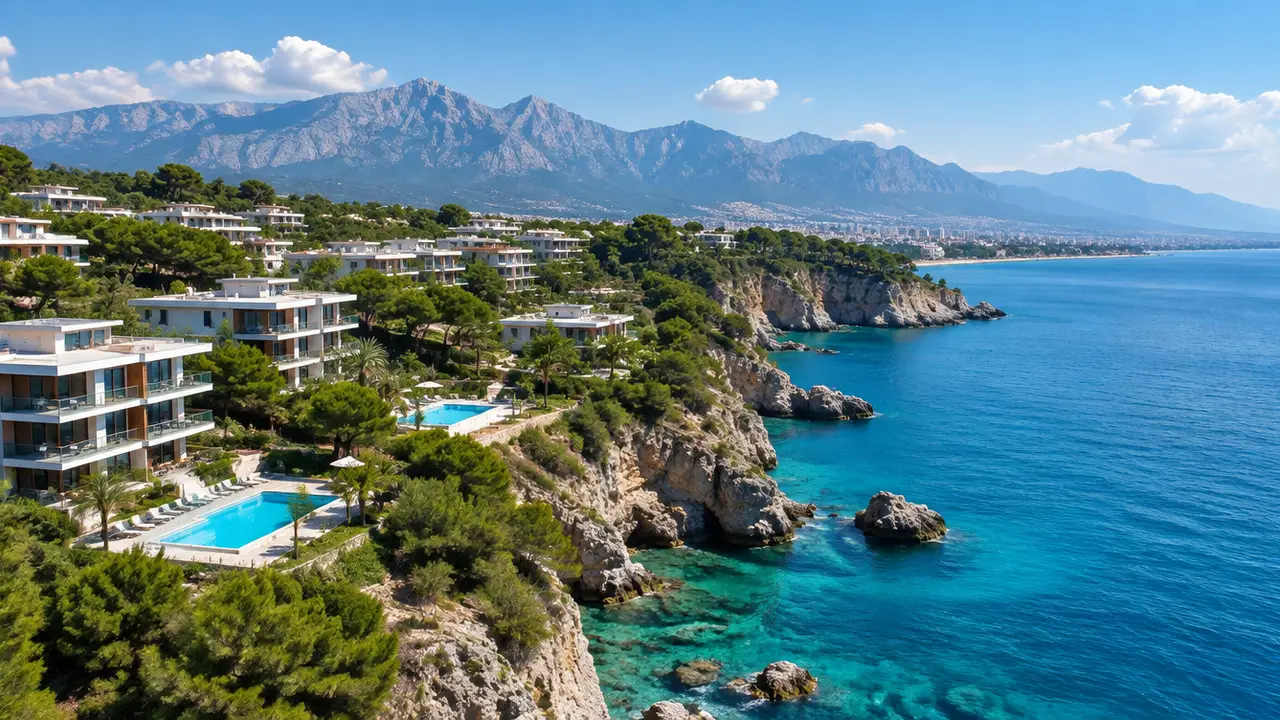
The coast offers newly built complexes with pools, gyms and security at prices well below Southern Europe. Istanbul is a deep, year-round market with enormous variation between districts.
Can foreigners buy — and what exactly?
Foreigners can buy residential property freehold in their own name, subject to limits: property in military and security zones is excluded (clearance is checked during the process), total foreign ownership is capped at a share of each district, and there are caps on the total land area an individual foreigner may own. Citizens of a few countries are barred or restricted. Companies with foreign capital can also acquire property under separate rules.
In some neighbourhoods with high foreign populations, authorities have closed residence registration for new foreign residents — this does not stop you buying, but it can block a residence permit at that address.
The buying process
Tax number and bank account
Obtain a Turkish tax number (quick at a tax office) and usually open a local bank account.
Appraisal report
Foreign buyers need a valuation by an SPK-licensed appraiser; the declared value cannot be below it for fee purposes.
Due diligence
Your lawyer checks the title (tapu), mortgages and annotations, the building’s occupancy permit (iskan), zoning and any debts.
Application and transfer
The application is made through the Land Registry system; buyer and seller sign at the land registry office with a sworn translator if needed; fees are paid and the new tapu is issued.
After transfer
Arrange compulsory earthquake insurance (DASK), transfer utilities and register for property tax.
Taxes and costs
| Cost | Typical amount | Notes |
|---|---|---|
| Title deed fee (tapu harcı) | 4% of declared value | Legally split 2%/2% but buyers often pay all; declared value must reflect the appraisal |
| Revolving fund fee | Fixed, modest | Land registry service fee |
| Appraisal report | Modest fixed fee | Mandatory for foreign buyers |
| Translator / notary / POA | Small | If you do not speak Turkish or sign via attorney |
| Agent commission | ≈ 2–3% + 20% VAT | Negotiable |
| VAT on new builds | 1%, 10% or 20% | Depends on size, location and value; exemptions available for some foreign buyers using foreign currency |
| Annual property tax | ≈ 0.1–0.6% of official value | Higher in metropolitan municipalities |
| DASK earthquake insurance | Annual, small | Compulsory |
Run your own numbers with the total cost calculator (select “Turkey”).
Mortgages and payment plans
Turkish banks can lend to foreigners but high lira interest rates make mortgages unattractive for most buyers. Many new projects offer developer instalment plans, often priced in euros or dollars. Compare instalment prices with the cash price.
Renting out and yields
Long-term tenancies are governed by the Code of Obligations; rent increases on renewal are capped by reference to consumer price inflation after a temporary 25% cap ended in 2024. Evicting tenants can be slow.
Short-term letting (up to 100 days) has required a tourism rental permit since 2024 under Law 7464. The application needs the consent of all other owners in the building, a single owner’s permits are limited within large complexes, and fines for unlicensed letting are substantial. Rental income must be declared and is taxed at progressive rates.
Residency through property
Owning a property appraised at $200,000 or more can support a short-term residence permit, renewable while you keep the property (the address must be in a neighbourhood open to registration). A property investment of $400,000 held for at least three years, confirmed by appraisal, is one route to Turkish citizenship. Properties previously sold to foreigners may not qualify for citizenship. Rules and exchange-rate calculations change — confirm with migration authorities and a lawyer.
Risks to know
- Currency and inflation — see above.
- Earthquake risk: check the building’s age, permits and engineering; buildings constructed under recent seismic codes are generally preferred.
- Occupancy permit (iskan): buying without it can cause problems with utilities, resale and residency.
- “Citizenship-ready” pricing: some properties are marketed at inflated prices to meet thresholds; rely on independent appraisal.
- Closed districts for residence registration.
- Short-let restrictions make many resort rental plans unworkable.
Where to buy: cities and areas
| Area | Type | Why buyers look here | Watch out for |
|---|---|---|---|
| Antalya (Konyaaltı, Lara) | Resort + city | Large city with airport and year-round life, beaches | Oversupply in some suburbs |
| Alanya (Mahmutlar, Kestel, Oba) | Resort | Big foreign community, many new complexes | Seasonality; short-let permits; resale mostly to foreigners |
| Istanbul (European & Asian sides) | Living | Deep year-round market, rental demand | Earthquake risk; closed districts; traffic |
| Bodrum, Fethiye | Resort / premium | Upscale holiday homes | High prices, short season |
| Mersin | Resort / budget | Lower prices on the eastern Mediterranean | Less international infrastructure |
Area notes describe general characteristics, not investment recommendations.
Frequently asked questions
Can a foreigner buy property in Turkey?
How much does a Turkish residence permit through property cost?
How much for Turkish citizenship by property?
Can I rent my Turkish apartment on Airbnb?
Where to verify
Start with these official or primary sources, then confirm the details with a local lawyer: