Country guide
Buying property in the UAE: Dubai, Abu Dhabi and Ras Al Khaimah
One of the most open and liquid markets for foreign buyers, with no personal tax on rent and a 10-year Golden Visa — but also one of the most cyclical.
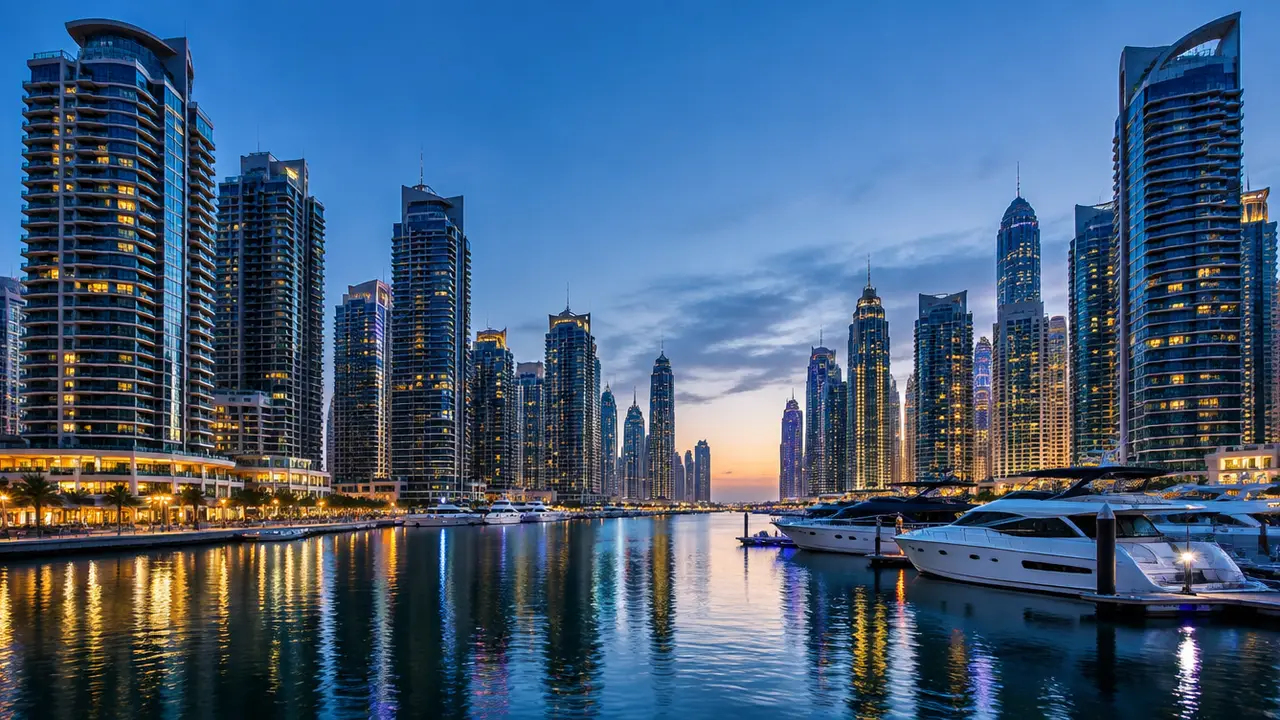
Cyclical market — know where we are in the cycle
Dubai prices and transaction volumes set records in 2023–2025, and a large pipeline of new homes is scheduled for completion in 2026–2027. Past cycles (2008–09 and 2014–2019) saw significant falls. Buy with a long horizon and a clear view on supply in your specific community.
Market overview
Dubai is the UAE’s largest and most international property market, with buyers from Europe, the former Soviet Union, India, the Gulf and beyond. Transactions are fast, registration is digital, and resale liquidity is high by global standards. Off-plan sales make up a large share of activity, supported by developer payment plans.
Abu Dhabi is smaller and historically less volatile, with foreign ownership permitted in designated investment zones such as Saadiyat, Yas and Al Reem islands. Ras Al Khaimah has attracted attention thanks to the integrated resort under construction on Al Marjan Island, with prices starting from a lower base than Dubai.
Can foreigners buy — and what exactly?
Foreigners can buy freehold in designated areas — in Dubai these include most of the well-known communities (Dubai Marina, Downtown, Palm Jumeirah, JVC, Business Bay and many more). Outside those areas ownership may be limited to long leases or to UAE/GCC nationals. In Abu Dhabi, foreigners can own freehold in investment zones. You can buy as an individual or through certain company structures; you do not need residence to buy.
The buying process
Agree terms and sign the MOU
For resale, buyer and seller sign a standard memorandum of understanding (Form F in Dubai) and the buyer usually pays a 10% security deposit, often held by the agent or trustee.
Developer NOC
The seller obtains a no-objection certificate from the developer confirming service charges are paid.
Transfer at a DLD trustee office
Both parties (or attorneys) attend a registration trustee; the balance is paid by manager’s cheques or transfer, fees are paid, and the new title deed is issued electronically.
Off-plan
The sale is registered on the DLD’s off-plan register (Oqood) and payments go into the project’s escrow account. The final title deed is issued after completion and full payment.
Cash resale transfers can complete in a few weeks; mortgage deals typically take longer.
Taxes and costs
| Cost | Typical amount | Notes |
|---|---|---|
| DLD transfer fee (Dubai) | 4% of price | Usually paid by the buyer; plus small admin/title fees |
| Trustee office fee | ≈ AED 2,000–4,000 + VAT | Depends on price band |
| Agent commission | Typically 2% + 5% VAT | Paid by the buyer on resale in Dubai |
| Mortgage registration | 0.25% of the loan + admin | Only with a mortgage |
| Valuation (mortgage) | ≈ AED 2,500–3,500 | Bank-arranged |
| Abu Dhabi transfer fee | 2% of price | Different registry (ADREC) |
| Service charges | Annual, per sq ft | Vary widely by community; check the official index |
There is no annual property tax in the traditional sense, but owners and tenants pay service charges and, in Dubai, a municipality housing fee collected through utility bills. There is no personal income tax on rental income or capital gains for individuals; corporate tax rules can apply to property held through businesses.
Run your own numbers with the total cost calculator (select “UAE”).
Mortgages and payment plans
UAE banks lend to both residents and non-residents. Central Bank rules cap loan-to-value for expatriate residents buying a first home, and non-residents typically get lower LTVs — often in the 50–60% range. Developer payment plans, including post-handover plans spreading payments over several years, are very common for off-plan purchases.
Renting out and yields
Long-term tenancies must be registered on Ejari in Dubai, and rent increases on renewal are limited by the official rental index. Indicative gross yields for apartments are often quoted around 5–8%, typically higher in mid-market communities than in prime locations.
Short-term letting requires a holiday home permit from Dubai’s Department of Economy and Tourism (DET), and the building or developer must allow it. Many owners use licensed holiday-home operators. Service charges and DEWA utilities are significant costs to factor in.
Residency through property
Property worth at least AED 2 million (by official valuation, which can differ from the price) can qualify for a 10-year Golden Visa including family. Several properties can be combined. In 2026 Dubai broadened eligibility for mortgaged properties (with a bank NOC) and qualifying off-plan units from approved developers. A shorter, renewable property-investor visa has also been available for lower values in Dubai. Check current criteria with ICP and the DLD before buying.
Risks to know
- Oversupply and price cycles: check the completion pipeline in your community.
- Off-plan speculation: flipping-driven demand can reverse quickly; handover delays still occur despite escrow.
- Service charges can be high and rise over time — ask for the history.
- Short-let competition: many units compete on the same platforms in popular areas.
- Legal system: disputes are handled under UAE law (Dubai Courts or specialist tribunals); contracts should be clear.
Where to buy: cities and areas
| Area | Type | Why buyers look here | Watch out for |
|---|---|---|---|
| Dubai Marina / JBR | Resort & rental | Waterfront towers, strong tourist and expat demand | High supply, older towers’ service charges |
| Palm Jumeirah | Resort / luxury | Iconic location, prime holiday homes | High entry price, luxury-cycle sensitivity |
| JVC, Dubai South, Arjan | Mid-market rental | Lower entry prices, higher gross yields | Large new-build pipeline |
| Ras Al Khaimah (Al Marjan Island) | Resort | Integrated resort under development, lower base prices | Speculative pricing ahead of opening |
| Abu Dhabi (Saadiyat, Yas, Al Reem) | Living / long-term | Capital city, steadier market, families | Smaller resale market than Dubai |
Area notes describe general characteristics, not investment recommendations.
Frequently asked questions
Can foreigners buy property in Dubai?
How much are the fees when buying property in Dubai?
What property value do I need for the UAE Golden Visa?
Is rental income taxed in the UAE?
Where to verify
Start with these official or primary sources, then confirm the details with a local lawyer: