Country guide
Buying property in Cyprus: Limassol, Paphos and Larnaca
An EU island with English-based law, English widely spoken and a permanent-residence route — as long as you buy in the Republic and understand the title system.
North and South are legally very different
This guide covers the Republic of Cyprus (the South), an EU member state. Buying in the North carries serious title and legal risks — including potential claims from pre-1974 owners. Read our guide to problem jurisdictions before considering it.
Market overview
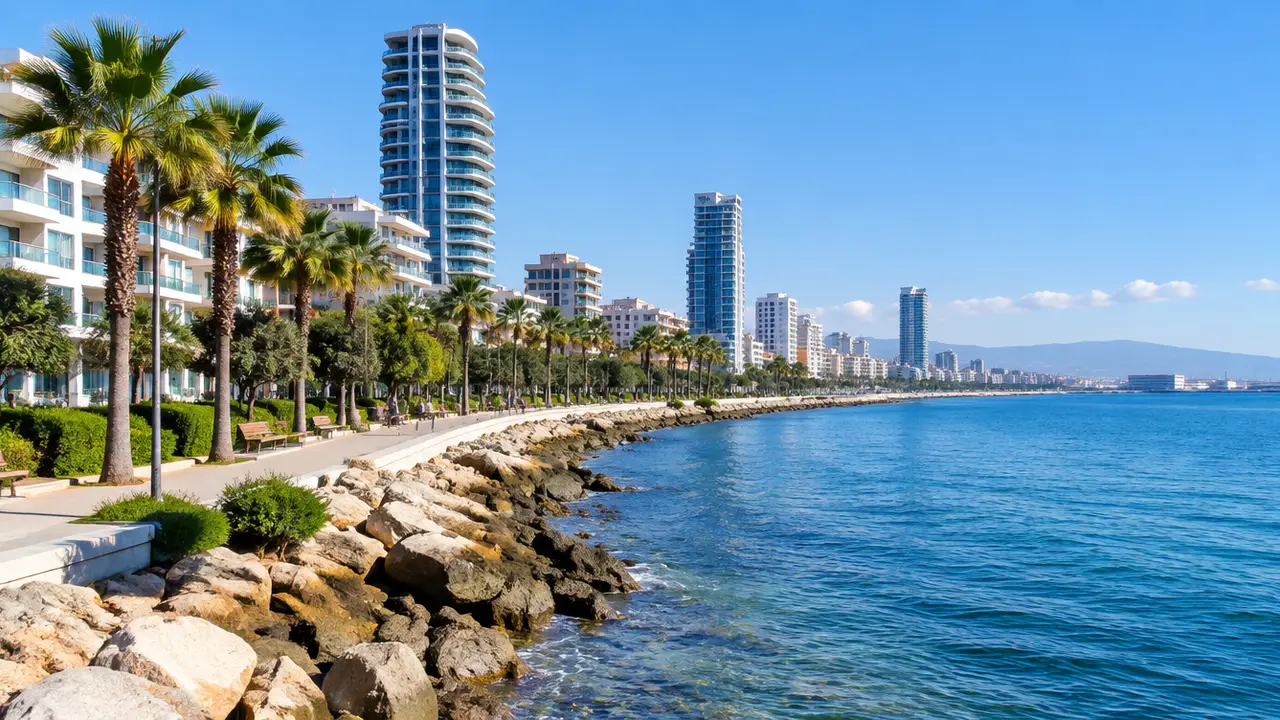
Limassol is the island’s business hub and its most expensive market, with high-rise seafront developments and strong rental demand from international companies. Paphos is popular with retirees and holiday-home buyers, and Larnaca is being regenerated around its marina and port with generally lower prices. Prices rose strongly after 2022 as companies and professionals relocated to the island.
Can foreigners buy — and what exactly?
EU citizens can buy without restriction. Non-EU buyers need permission from the district administration (on behalf of the Council of Ministers), which is usually a formality for a single home; the standard allowance is one property (apartment or house) or a plot of limited size, with more possible via approval or a company. You can take possession before the permit is granted.
The buying process
Lawyer and searches
Your lawyer checks the title deed, whether separate titles exist for the unit, and any mortgages on the land — including a developer’s mortgage.
Contract of sale
Signed with a deposit (often 10–30%). Pay stamp duty within 30 days.
Deposit the contract at the Land Registry
This “specific performance” filing protects your right to the property even before title transfer — an important step in Cyprus.
Title transfer
Once titles are available and payment is complete, the transfer is registered and fees are paid.
Taxes and costs
| Cost | Typical amount | Notes |
|---|---|---|
| VAT (new builds) | 19% standard; 5% reduced | 5% only for a main residence within size and price limits |
| Transfer fees (resale / no VAT) | 3% / 5% / 8% progressive | Halved when VAT not charged; not payable when VAT was paid |
| Stamp duty | 0.15–0.2% | Capped at €20,000 |
| Lawyer | ≈ 1% | Plus VAT |
| Agent | Usually paid by the seller | |
| Annual costs | Municipal fees, common expenses | No national immovable property tax since 2017 |
Capital gains tax of 20% applies to gains on Cypriot property, with lifetime allowances in some cases.
Run your own numbers with the total cost calculator (select “Cyprus”).
Mortgages and payment plans
Cypriot banks lend to non-residents on a selective basis, typically with larger deposits than for residents. Developers sometimes offer stage payments during construction.
Renting out and yields
Limassol has strong long-term demand from corporate tenants; Paphos and Ayia Napa/Protaras are more seasonal. Indicative gross yields are commonly quoted around 4–6%. Holiday lets must be registered with the Deputy Ministry of Tourism. Rental income is taxed and additional contributions may apply depending on residence and domicile status.
Residency through property
The fast-track permanent residence route requires an investment of at least €300,000 (plus VAT) in new residential property bought from a developer (or other qualifying investments), a secure annual income from abroad of at least €50,000 plus amounts per dependant, and funds transferred from abroad. Cyprus’s citizenship-by-investment programme was closed in 2020 and has not reopened.
Risks to know
- Title deed delays: historically many buyers waited years for separate titles, and some were caught by developers’ mortgages on the land. Check before buying.
- Northern Cyprus — see the warning above.
- High Limassol prices relative to local incomes; sensitivity to the corporate sector.
- Cyprus is in the EU but not yet in the Schengen area.
Where to buy: cities and areas
| Area | Type | Why buyers look here | Watch out for |
|---|---|---|---|
| Limassol | Living + premium | Business hub, year-round demand, international schools | Highest prices; traffic; construction boom |
| Paphos | Resort / retirement | Popular with British and European retirees | Seasonality; older stock title checks |
| Larnaca | Resort + living | Airport, marina regeneration, lower prices | Regeneration timelines |
| Ayia Napa / Protaras | Resort | Beaches and holiday lets | Strong seasonality |
Area notes describe general characteristics, not investment recommendations.
Frequently asked questions
Can non-EU citizens buy property in Cyprus?
What are property transfer fees in Cyprus?
How can I get permanent residence in Cyprus through property?
Is it safe to buy in Northern Cyprus?
Where to verify
Start with these official or primary sources, then confirm the details with a local lawyer: